

Why Stave?
 Superior Sound
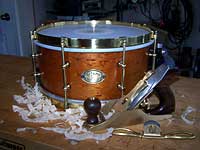
One of the most important factors when creating a high quality instrument is the material being used. At Artisan Drumworks we hand select the finest musical grade hardwoods by both appearance and tonal properties for our snare drums and drum sets. By using the very best quality hardwood, optimal sound is assured. We will not compromise the quality of the materials we use. The design of our instruments will always reveal the true content of the drum, unlike ply shells. What you see is what you get. No fillers, just solid timber.
The primary factors affecting drum sound are: shell material (wood type), dimensions (length, diameter, and thickness), bearing edges, drumhead selection, and tuning. Other peripherals are the type and weight of stick being used, hardware, method of mounting and last, but certainly not least, the player’s “touch.”
While the materials being used are a primary consideration, the method of construction is an all- important factor in the sound of a drum, and one we believe is the clincher. Consider the three main types of drum shell construction:
- Ply (mass produced)
- One -Ply (”solid”)
- Stave (segments)
Ply drum shells
A luthier makes their acoustic guitar bodies out of solid wood. Mallet instruments are made out of solid rosewood pieces and are shaped and sized to produce the desired pitch. In acoustic guitars little glue is used and in mallet instruments no glue is used. Glue dampens natural wood vibration. Ply drum shell construction requires an enormous amount of glue which negatively effects the wood’s natural tone. Every square inch of every ply has to be covered with glue in order to make a good bond. For example:
6” x 14”Ply Drum Shell (6” x 13.875” actual measurement)
1 ply = 261.60 sq. inches of surface area
6 plys x 261.60= 1,569.60 sq. inches1,569.60 square inches of surface area has to be covered with glue to make the bond!
A ply drum shell can be thin because the lamination of several plies adds strength. This is how plywood is made. The only difference is that cross lamination is used for added strength in plywood. Plywood is meant to create strength in construction applications, not sound. While this may sound extreme, consider a simple demonstration of this fact. Suspend a piece of plywood, say 4” x 6”, 3/8” thick, and tap it with your finger or a yarn mallet (such as used for marimba) with your ear next to the piece. The sound produced will be “thug”. Now do the same test with a piece of hardwood having the same dimensions. The sound produced will be “bing”, a marked difference. You will actually get a tone from the wood! There is little wonder why manufacturers of mallet instruments use solid pieces of wood, not plywood. We use this demonstration at shows and presentations to exhibit our premise for making our drums the way we do.
One Ply (solid) drum shells
Another popular and very old type of shell manufacturing is one-ply, also known as “solid” (although not a true solid). This is preferred to many plies because it contains one of the elements (solid hardwood) for which we know from our test lends itself to better tonal quality and resonance. One-ply drum shells use a single piece of hardwood and glue-in reinforcement rings on the inside edges of the shell. Once the wood is heated to a very high temperature, it is bent into a rough cylindrical shape, placed in a form for a period of time to cool and cure, glued, and then machined to produce a cylinder. Naturally, the bending process imposes a degree of stress on the timber. This fact necessitates the use of glue-in reinforcement rings to maintain roundness, as the wood will want to straighten out and return to it’s original orientation. Glue -in reinforcement rings also raise the fundamental pitch of the drum shell which can be objectionable. However, they do provide the necessary strength to the outer edges of the drum shell where it is needed. Because one-ply (solid) drum shells use considerably less glue than ply drum shells, they resonate more freely and produce better, purer tone than ply shells. One-ply (solid) shells have become widely popular among many professional, discerning players. We offer one-ply shell snare drums and drum sets as an alternative to our stave shells at Artisan Drumworks.
 Stave Drum Shells
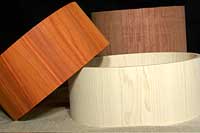
Stave Design (block): After years of manufacturing all three types of shells and extensive testing both in house and in real world playing situations, we have determined that stave design is superior in producing the most natural, pure tone and maximizes the potential of each individual wood species. We have also determined the best tonewoods, domestic and exotic, for this construction process. Stave drum shell design has many advantages over multi- ply and one-ply shell types. Stave drum shells are made of solid hardwood pieces that are edge-glued and require a fraction of the glue used in ply shells. In addition, there is no bending or stress imposed on the drum shell such as is present in multi and one ply shells.
 Sensitivity
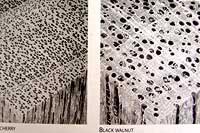
The “bearing edges” are very important regarding response, feel and overall tone of the drum. The orientation of the grain (whether it is horizontal or vertical) also effects the drum’s sensitivity and decay. This is uniquely demonstrated in the Acoustic Model of Anisotropy below.
From this experiment, it is found that sound energy travels nearly twice as fast with the grain (stave) than it does across the grain (ply)!! This fact accounts for the incredible responsiveness of stave-designed drums.
Wood-workers know that “crosscutting” (against the grain) is much more difficult than “ripping” (cutting with the grain). The same principle applies with sound transmission. Ply drum shells and one- ply drum shells are configured where sound energy travels across the grain. The path of vibration is slower in this configuration. Stave drum shells have the grain of the wood running vertically. Sound energy is traveling with the grain, which is quicker and smoother. In addition, there are “sound channels” which run in this vertical orientation. These are the 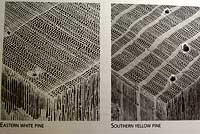 actual vessels of the tree that are also known as sap pipelines. They are the “veins” that carry the nutrients and water necessary for growth. These veins produce a wonderful pathway for sound transmission! This is the single largest premise in the superior tone and response of stave drums. When the drumhead is struck, these “sound channels” transmit the vibration energy effortlessly. This factor produces a drum that is extremely sensitive and capable of huge dynamic range.
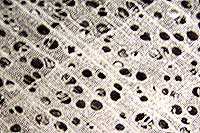 Finally, a higher level of durability exists because the end grain of the wood is at the bearing edge. End-grain is tougher than edge-grain, and therefore bearing edges will last longer and have to be re-cut fewer times than multi-ply and one-ply shells.
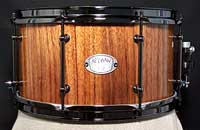 Aesthetic Appeal
Tone, sensitivity, and appearance are all important issues because you are a serious about your craft. We are also serious about playing, not just crafting our drums. Therefore, we handcraft every one of our drums with the intent to distinguish them from other drums on the market and create the best sounding drums possible. We also play our drums in the field! If you are looking for a custom snare drum or custom drum set where you can create a sound that is truly fresh and unique, you have found them here. When you play an Artisan Drumworks snare drum or drum set, you will discover what we have discovered in our quest for the ultimate drum(s).